
Get your research published, not just written.
We turn analysed research into a submission-ready manuscript: IMRaD structure, reporting that meets journal standards and a journal that matches your scope. Prepared by researchers who publish themselves.
Meet the Researchers Behind Your Paper
Your manuscript is prepared by qualified researchers who publish themselves, not by generic content writers.
 🎓 Master’s in Data Science
Biplab Paul
Data science & analytics lead
Machine learning, statistical analysis and data visualisation for quantitative research, predictive modelling and hypothesis testing.
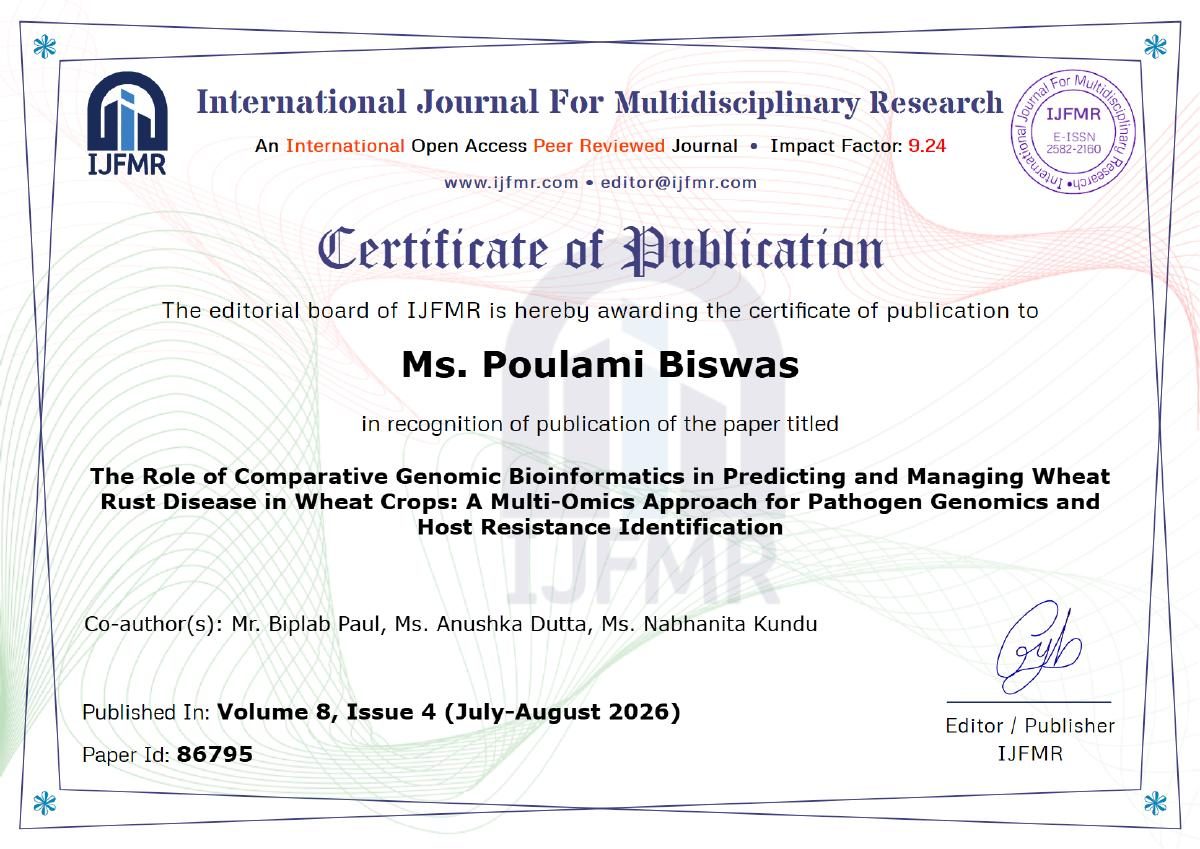
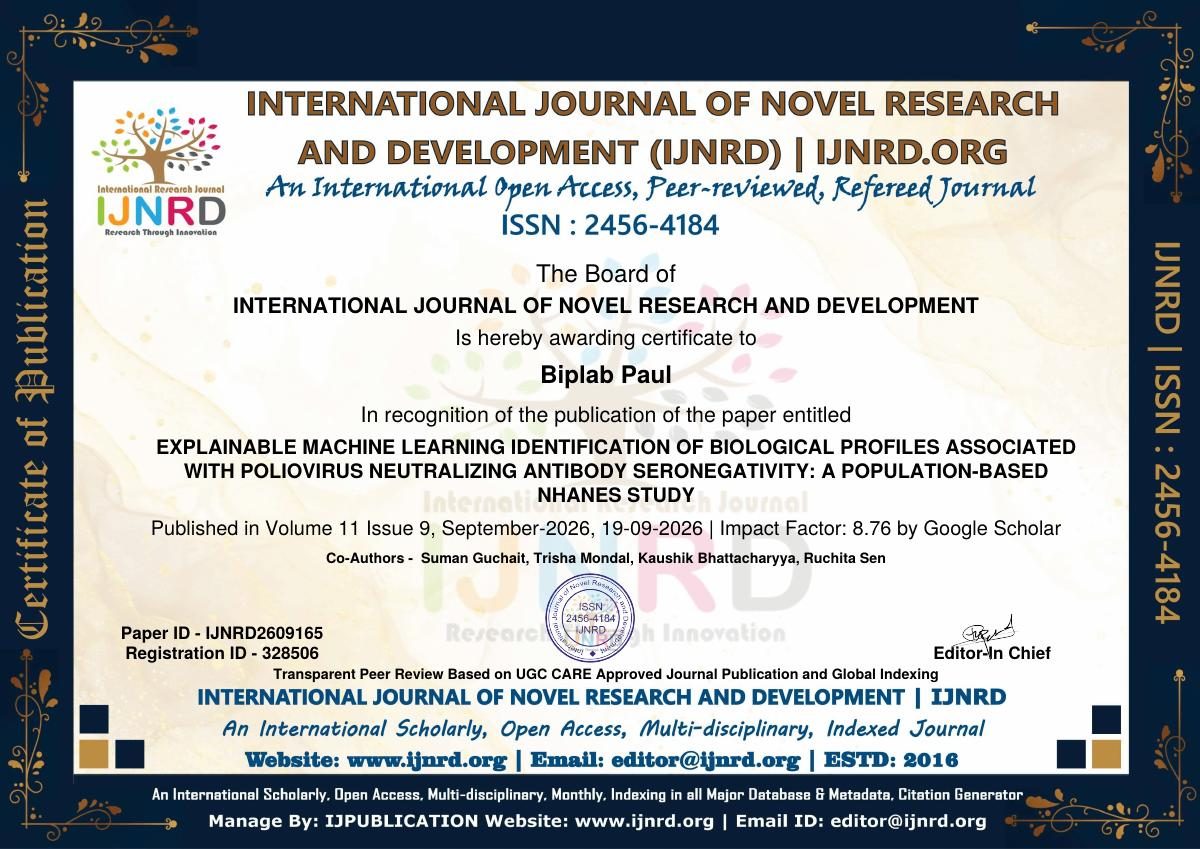
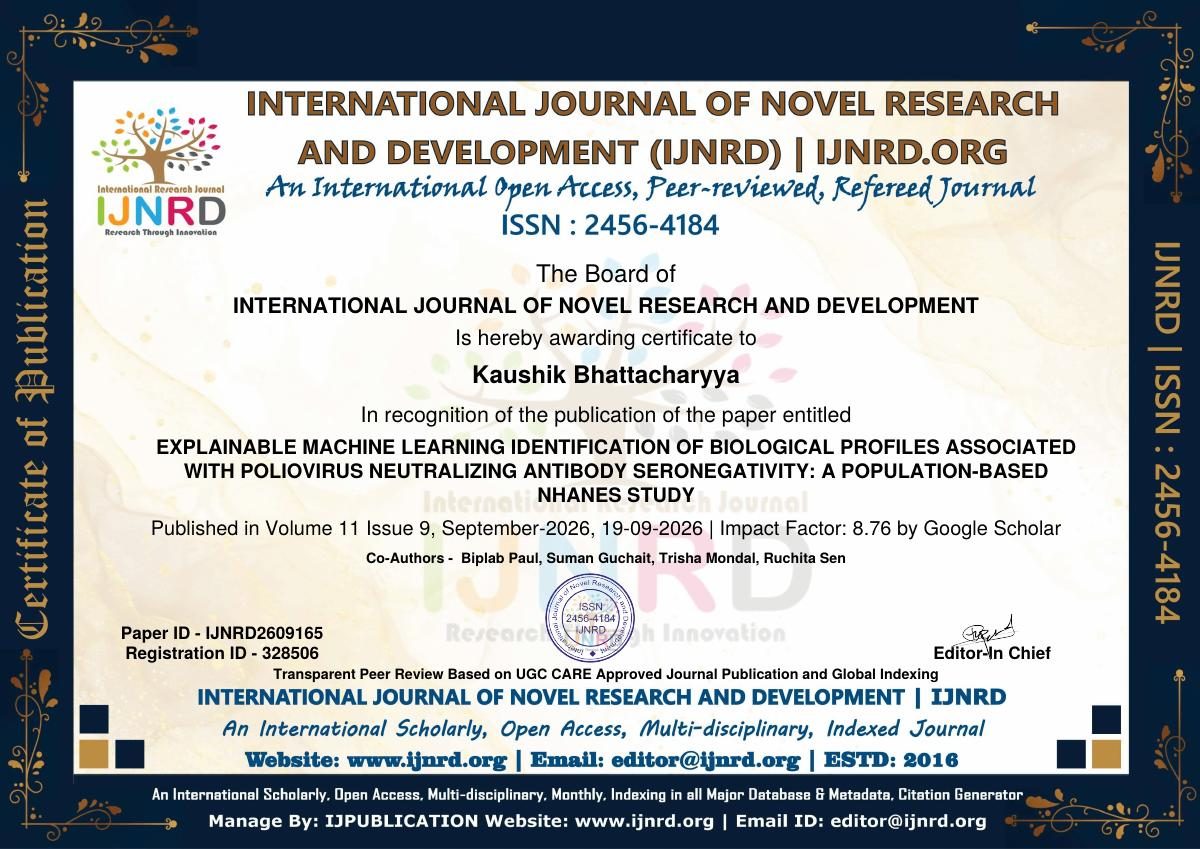
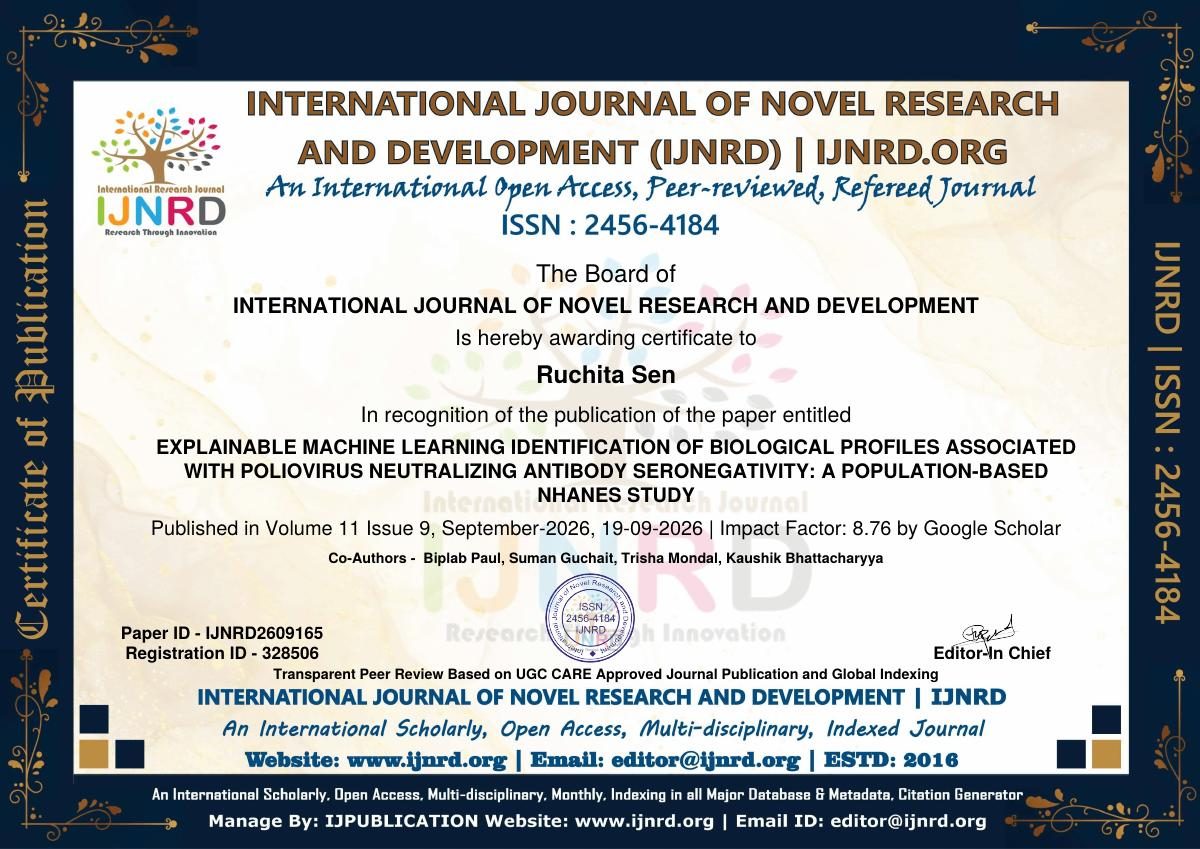
Published: Lead author, IJFMR 2026 (wheat rust genomics). Co-author, IJNRD 2026 (NHANES poliovirus study).
View profile 🎓 MSc Data Science (in progress)
Kaushik Bhattacharyya
Data analytics & NLP
3 years supporting research projects, thesis work, statistical analysis and data interpretation.
Published: Co-author, IJNRD 2026 (NHANES poliovirus study).
View LinkedIn 🎓 Degree in Mechanical Engineering
Suman Guchait
Engineering expert & technical specialist
3 years in engineering analysis, technical documentation and engineering research, with data tools for reporting.
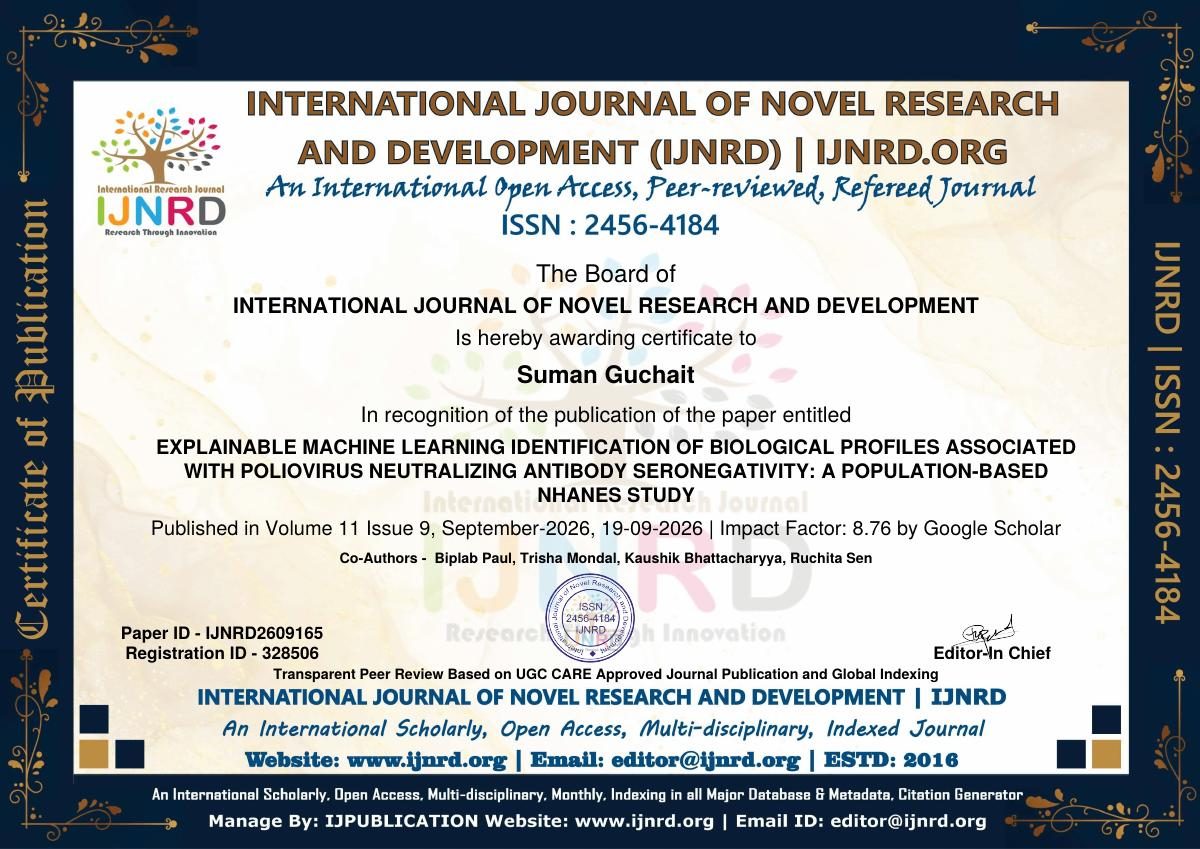
Published: Co-author, IJNRD 2026 (NHANES poliovirus study).
View LinkedIn 🎓 BSc Zoology
Nabhanita Kundu
Biology expert
Biology and life-sciences support, research writing and manuscript preparation.
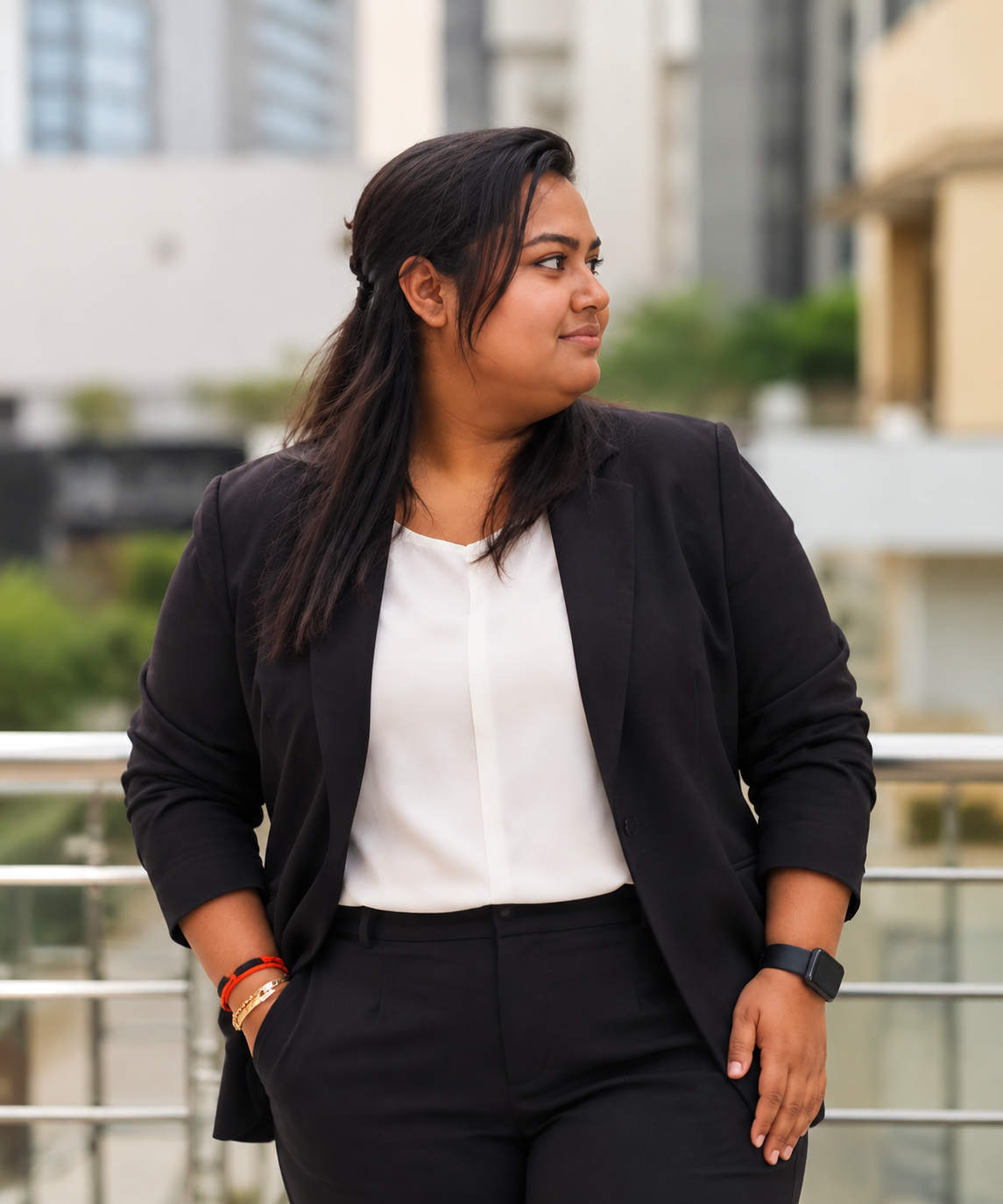
 🎓 B.Com (Hons), Accountancy
Kushal Chanda
Finance expert
Finance and accountancy assignments and research support.
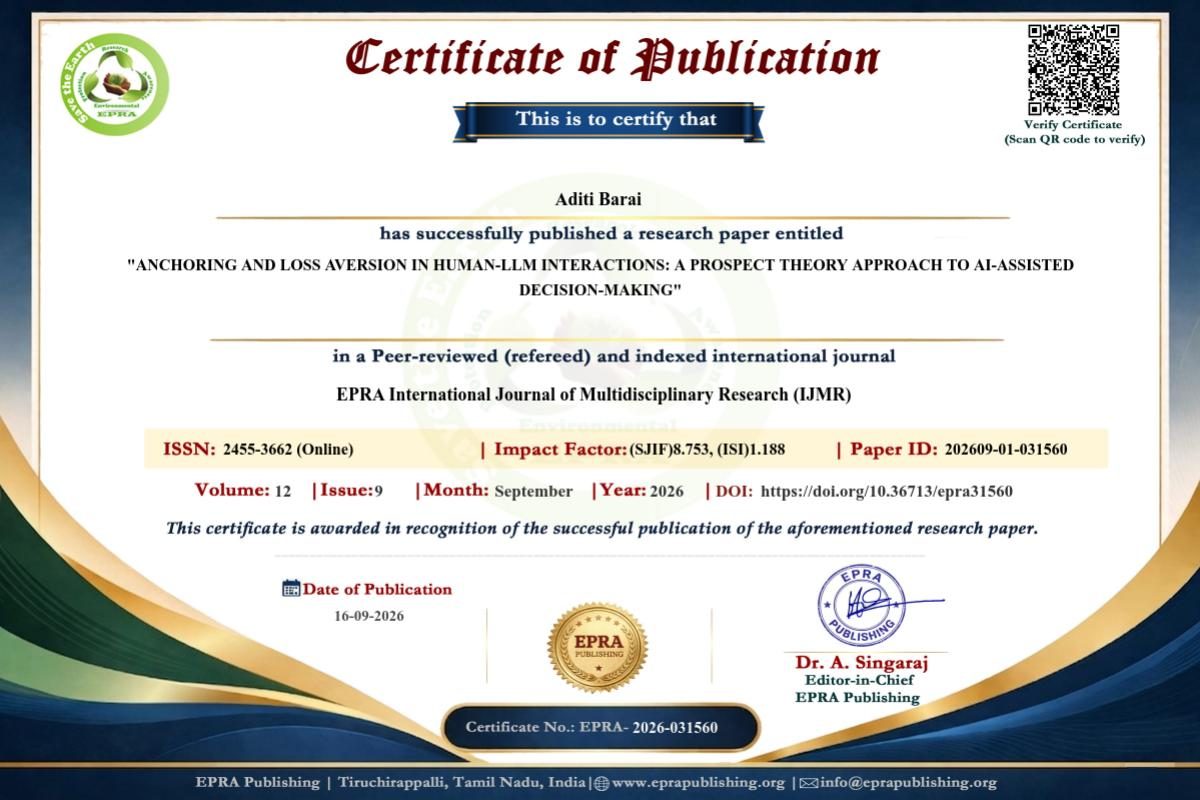
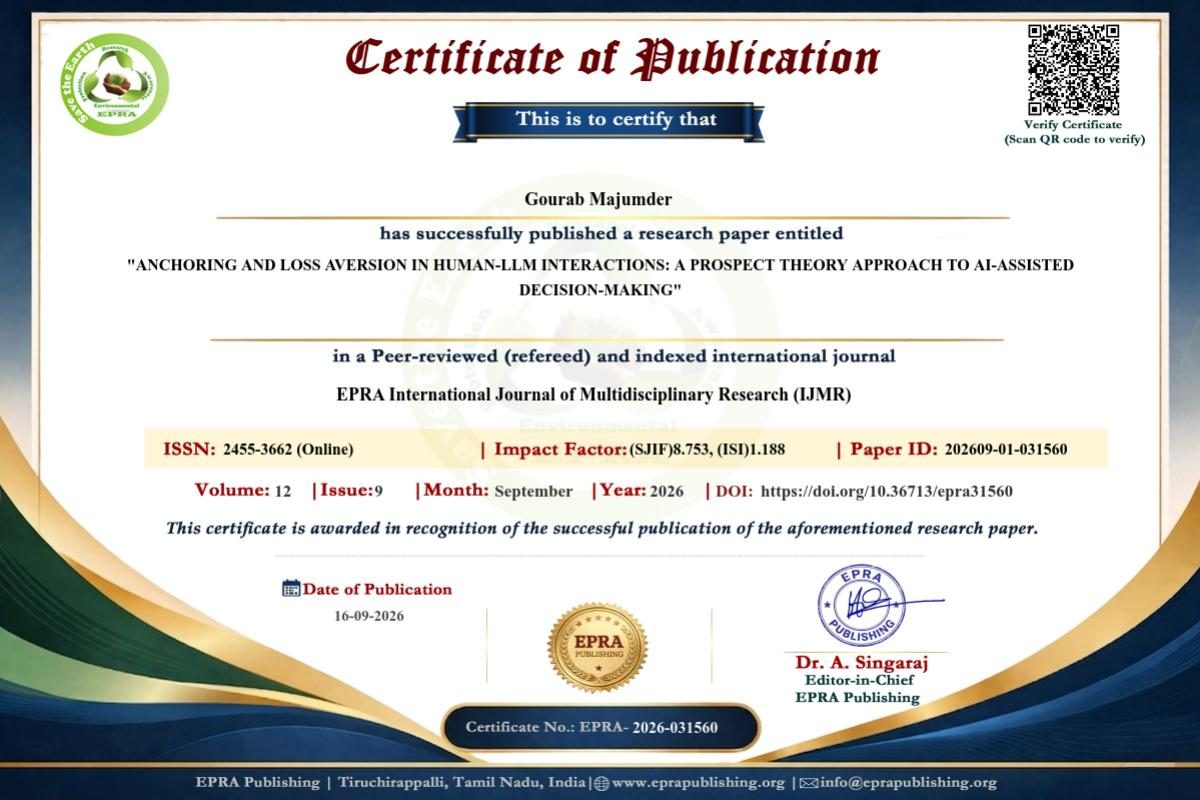
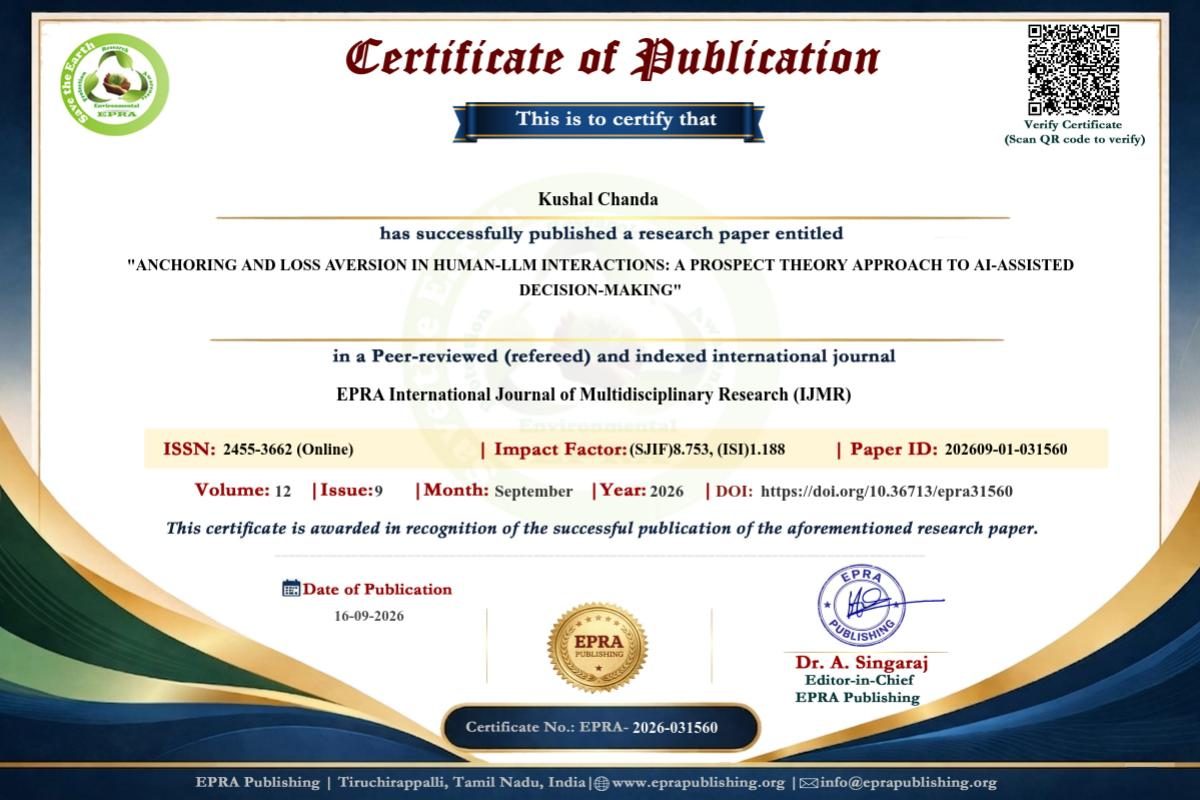
Published: Co-author, EPRA IJMR paper on anchoring and loss aversion in human–LLM decisions.
 🎓 Master’s in Microbiology
Anushka Dutta
Research writer
Microbiology and life-sciences research article drafting and thesis writing support.
 🎓 Master’s in Anthropology
Poulami Biswas
Research writer
Anthropology and social-science research article drafting, editing and publication support.
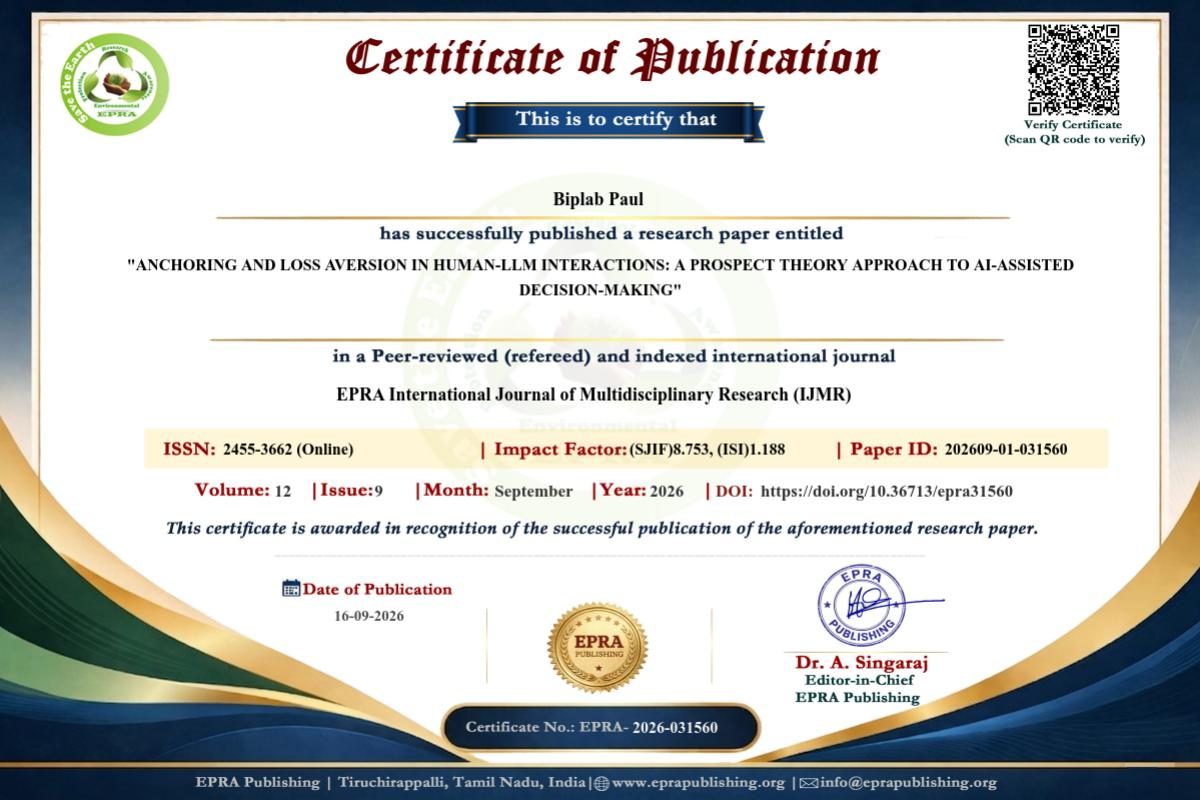
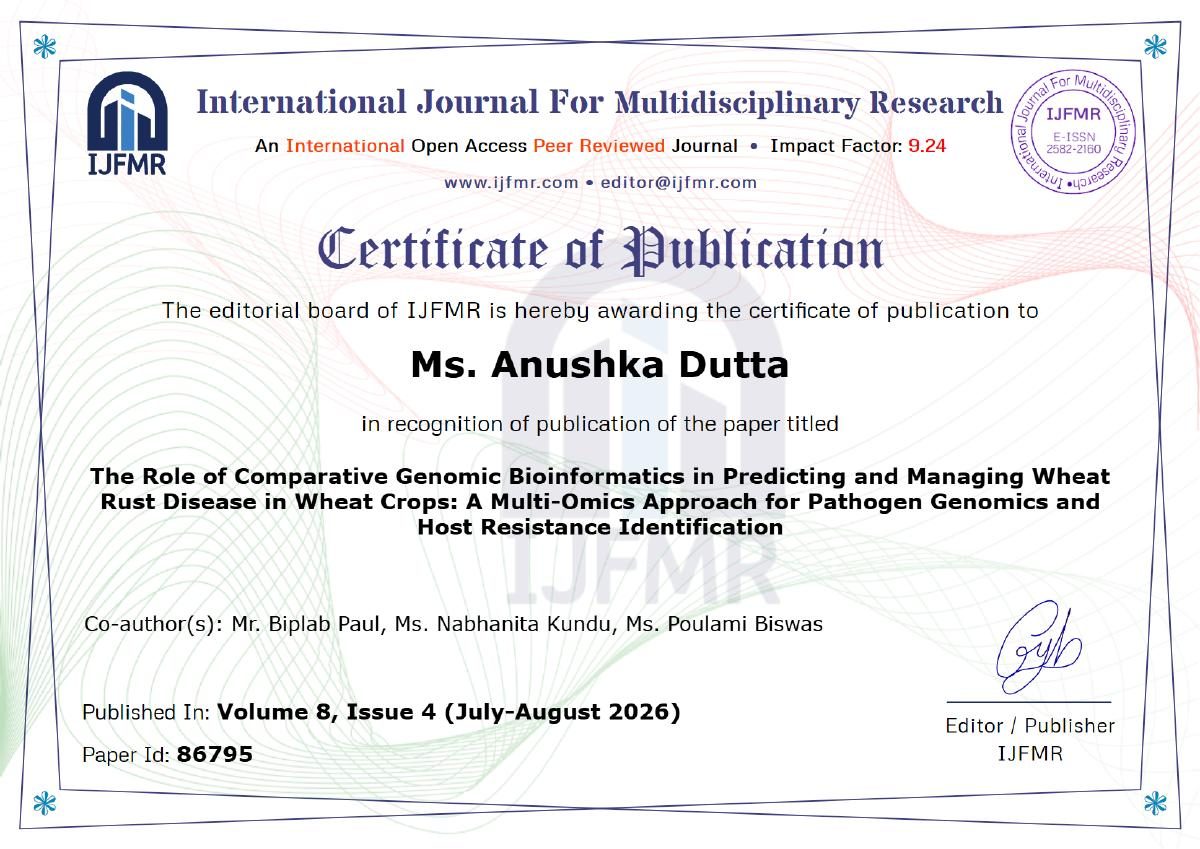
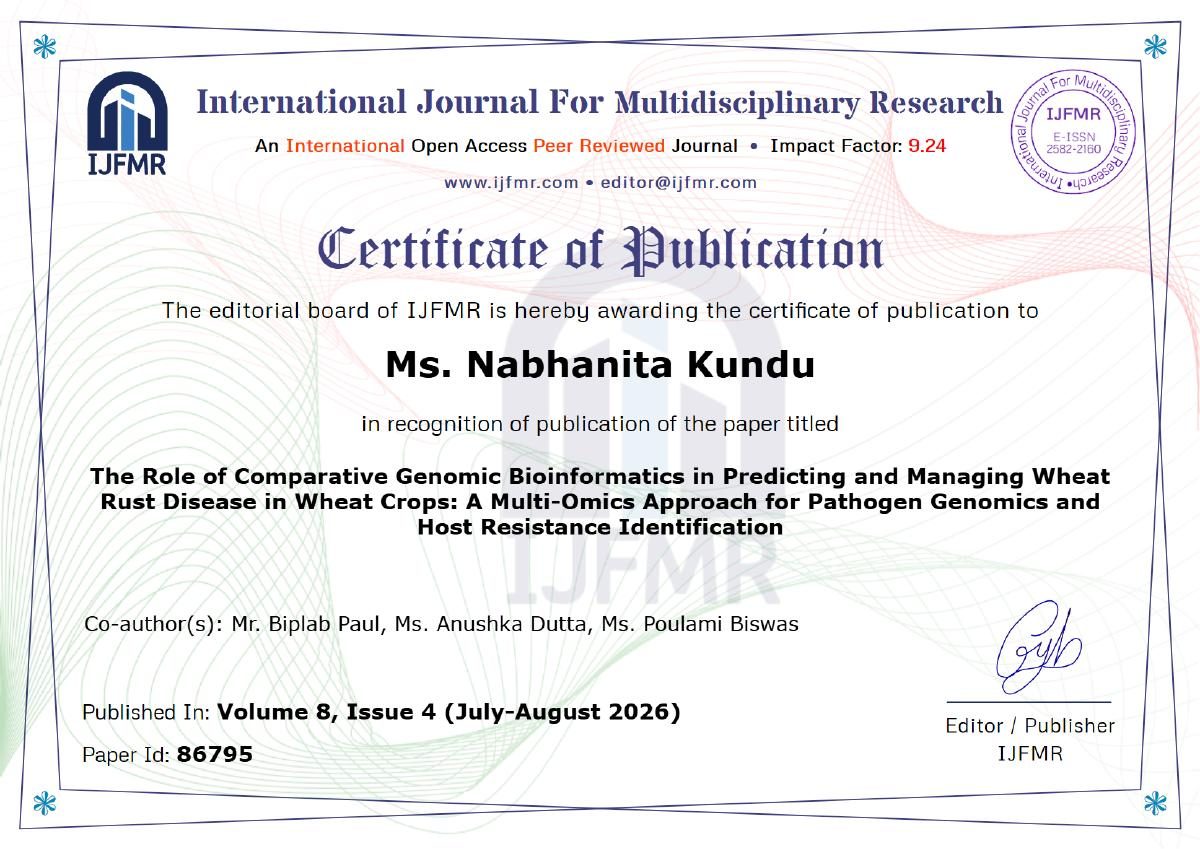
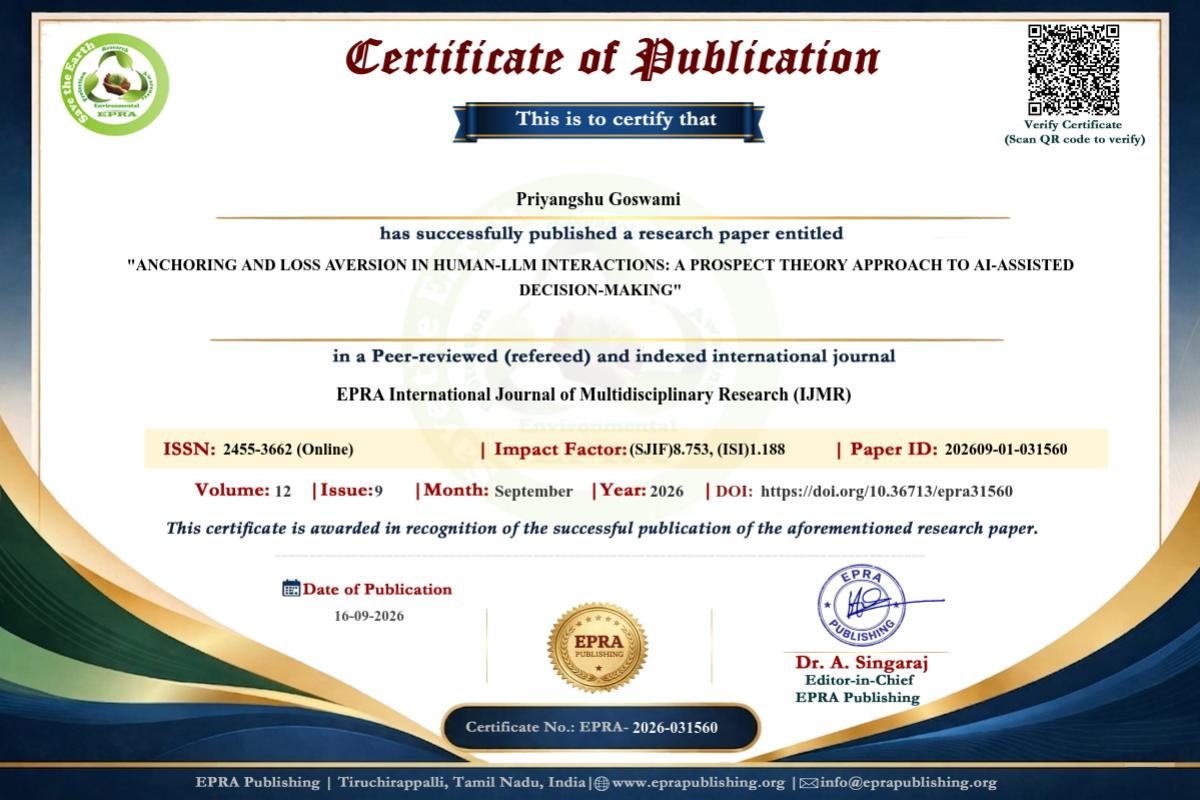
Our Publication Certificates
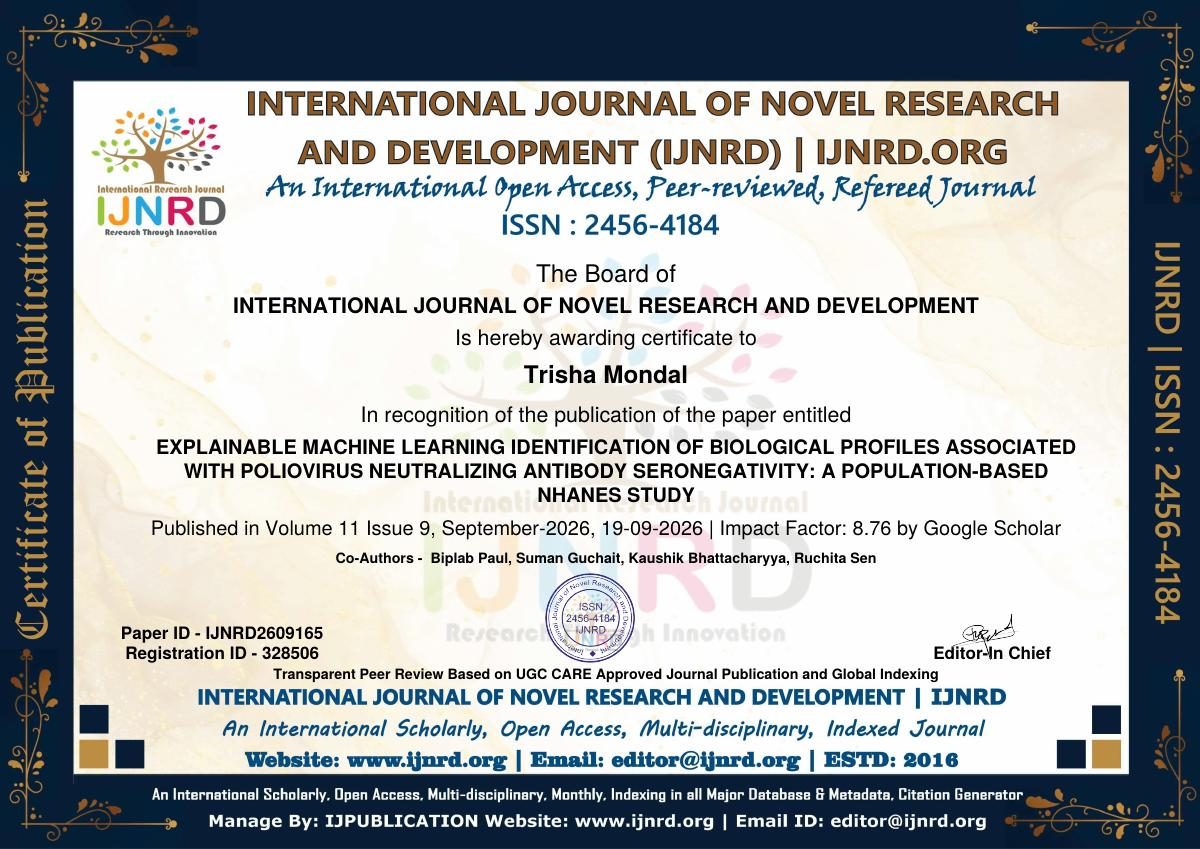
Official certificates of publication for research papers our team has supported in peer-reviewed journals.
Papers by Our Writers
Peer-reviewed papers our research team has written and published. Preview the first page, then download the full PDF to check the quality yourself.
 PDF preview · page 1
IJFMR · Vol. 8, Issue 4 (July–August 2026)
The Role of Comparative Genomic Bioinformatics in Predicting and Managing Wheat Rust Disease in Wheat Crops: A Multi-Omics Approach
Paper ID 86795 · DOI 10.36948/ijfmr.2026.v08i04.86795
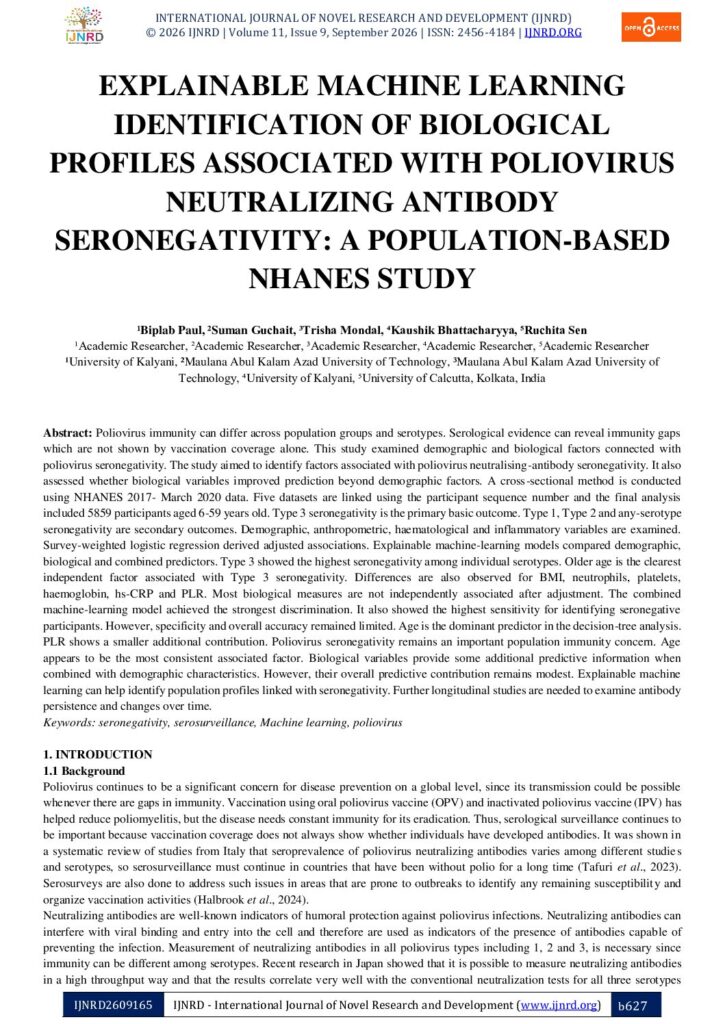 PDF preview · page 1
IJNRD · Vol. 11, Issue 9 (September 2026)
Explainable Machine Learning Identification of Biological Profiles Associated with Poliovirus Neutralizing Antibody Seronegativity: A Population-Based NHANES Study
Paper ID IJNRD2609165 · Registration ID 328506
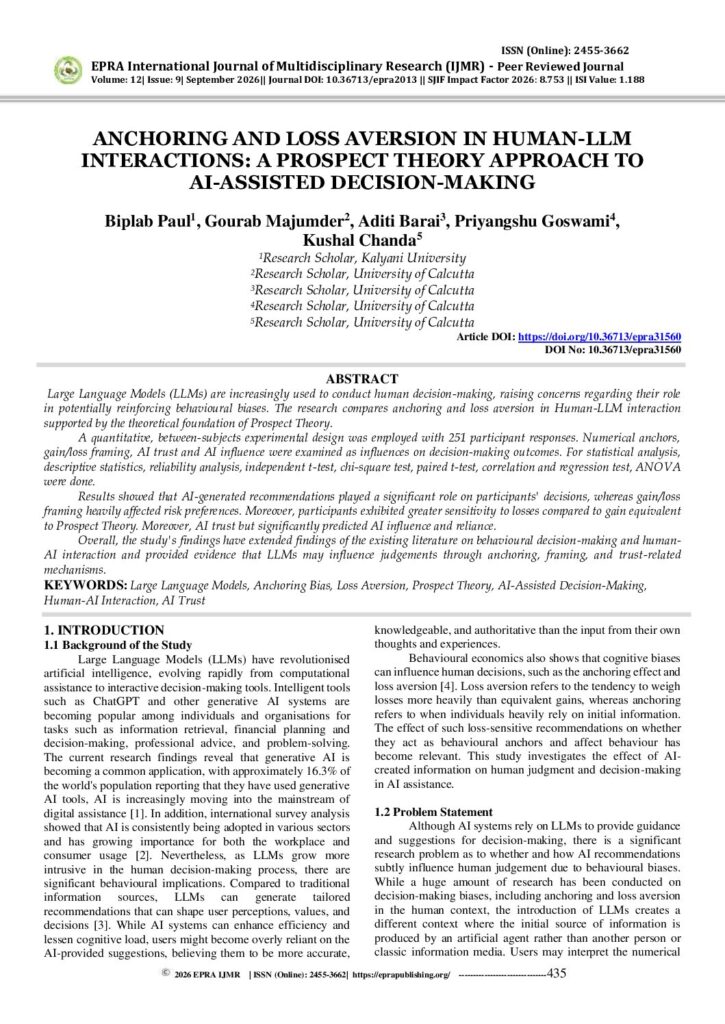 PDF preview · page 1
EPRA IJMR · Vol. 12, Issue 9 (September 2026)
Anchoring and Loss Aversion in Human-LLM Interactions: A Prospect Theory Approach to AI-Assisted Decision-Making
Paper ID 202609-01-031560 · DOI 10.36713/epra31560
The real bottleneck
Your research isn't the problem. The reporting is.
Scholars usually assume a rejection means the science wasn't good enough. Far more often, the paper never reached anyone qualified to judge the science. High-ranking journals return a large share of submissions at the editor's desk, and the reasons are almost always procedural: the paper was sent to the wrong journal, the methods couldn't be reproduced from what was written, the ethics statement was absent, or the English got in the way of the argument.
Every one of those is fixable before submission — and none of them requires new data.
Excellence Innovations writes and prepares manuscripts for journal submission. That means the structure, the statistical reporting, the figures, the journal shortlist, the cover letter and, when the reviews arrive, the point-by-point response. Whether you are starting from a dataset, a thesis chapter, a rough draft or a rejection letter, we work from where you are.
We support researchers and doctoral scholars across India, the UK, Australia, Canada, the UAE and Malaysia, in management, engineering, computer science, medicine and public health, economics, education and the social sciences.
First, what are you writing?
Six article types. They are not interchangeable.
Most first-time authors write a review article in IMRaD format, or submit a short communication at full paper length. Getting the type right before you write saves a rewrite later.
Article types compared
Original research · 4,000–7,000 words. New data, IMRaD structure, full methods and statistical reporting.
Review article · 5,000–8,000 words. A critical synthesis of a field, thematically structured with no new data.
Systematic review · 6,000–9,000 words. PRISMA flow, defined search protocol, quality appraisal, often a meta-analysis.
Conference paper · 4,000–6,000 words. Template-driven (usually IEEE or ACM) with hard page limits.
Short communication · 1,500–3,000 words. One significant finding, condensed methods, few figures.
Case report · 1,000–2,500 words. Presentation, intervention, outcome, consent and CARE compliance.
Lengths are typical ranges. Your target journal's author guidelines override all of them, including the abstract word limit and the maximum number of figures and tables.
Why papers get returned without review.
Desk rejection is an editorial screening decision, not a scientific verdict. It usually arrives within days, with a form letter that does not tell you which box you failed.
Almost all of it is work you can do before submitting — which is the entire argument for preparing a manuscript properly rather than submitting and hoping.
Before you pay any article processing charge
Predatory journals target authors close to a submission deadline. The signals are consistent: unsolicited invitations, acceptance promised within days, a fee demanded before peer review, an unverifiable editorial board, and an "impact factor" from an organisation nobody recognises. A paper published there can be rejected by your university and is very hard to withdraw.
Related Case Studies
See how we've helped students with real data projects like these
Ways we work
Six kinds of support. Commission what you need.
Full manuscript writing
From your analysed data to a submission-ready paper — structure, reporting, figures, references and cover letter.
Thesis chapter to article
A chapter condensed into a focused paper: literature cut back, methods tightened, one central claim made.
Analysis & reporting
The statistics run or re-run, with output tables and reporting that meets journal standards.
Language & structure editing
Your draft edited to publication standard — clarity, flow, terminology and argument order.
Journal selection
A shortlist matched to scope and indexing, with rejection-risk notes and predatory screening.
Reviewer response
Point-by-point response letter, tracked revisions, and advice on which requests to decline with justification.
What you receive
A submission package, not just a document.
Everything an editorial system will ask you to upload, prepared in the format the journal specifies.
- The manuscript in the journal's template, with a blinded version where double-blind review is required.
- Figures and tables at journal resolution, captioned to their conventions, supplied as separate files.
- Cover letter addressed to the editor, stating novelty, fit and any suggested reviewers.
- Reference library in EndNote, Mendeley or Zotero, styled to the journal.
- Analysis files — SPSS syntax, R scripts or the project file, so the reporting is verifiable.
- Turnitin similarity report before submission, not after a flag.
Free Samples
Download samples related to research article and manuscript writing
From Our Blog
Guides on research article writing


Before you decide, see how we work
What it costs, how the process runs and why authors trust us with their manuscripts.
Quality Support, Transparent Costs
See what support costs and how milestone payments work.
View pricing →How We WorkFrom first message to submission
The step-by-step process from your data or draft to a submission-ready paper.
See our process →Why Choose UsHonest, qualified, transparent
Qualified researchers, clear ethics and no guaranteed-acceptance promises.
Why clients choose us →Timelines & fees
Quoted per deliverable, paid per
milestone.
Fees depend on discipline, whether the analysis is done, the target journal's requirements and the state of any existing draft. Rescuing a desk-rejected manuscript and writing one from a clean dataset are different jobs. See our pricing or how we work.
We do not charge a fee contingent on acceptance, and we do not take payment for publication itself. If a provider offers "guaranteed publication for a fee", that fee is almost certainly going to a predatory outlet. See why clients choose us.

Our Published Research Article Writers
Meet our experienced researchers and academic writers who have contributed to peer reviewed journals and international publications.

Biplab Paul

Nabhanita Kundu

Anushka Dutta

Poulami Biswas
Our Published Research Publication
The Role of Comparative Genomic Bioinformatics in Predicting and Managing Wheat Rust Disease in Wheat Crop: A Multi...
Journal:
International Journal for Multidisciplinary Research (IJFMR)
Publication Status:
✓ Published Research Article
DOI:
10.36948/ijfmr.2026.v08i04.86795
Author:
Our Research Writer
Before you send a draft.
Questions authors ask
What is IMRaD structure in a research article?
IMRaD stands for Introduction, Methods, Results and Discussion — the standard structure for original research articles in most science, health and social science journals. Review articles do not follow it.
Why do journals reject papers without sending them to review?
Usually scope mismatch, thin methods, unclear English, a missing ethics statement, ignored formatting rules or a similarity flag. Most are fixable before you submit.
Can you help convert a thesis chapter into a journal article?
Yes, it is one of our most common requests. The literature review must shrink, the methods must be tighter, and the discussion must make one focused claim.
How long should each section of a research article be?
For a 5,000-word article: abstract 250, introduction 750, methods 1,000, results 1,250, discussion 1,500 and conclusion 250. A journal's own limits always override this.
Do you help select the right journal?
Yes. We shortlist by scope, indexing, review time and rejection risk, and screen against predatory publisher lists before you pay any charge.
Can you guarantee my paper will be accepted?
No, and no honest provider can. Editors and reviewers decide. We improve everything that causes rejection before review: scope fit, reporting, structure, language and compliance. Anyone promising guaranteed acceptance is misleading you.
Do you write responses to reviewer comments?
Yes. We draft a point-by-point response letter, mark the changes in the manuscript, and advise where a request should be respectfully declined.
How long does a research article take?
Three to four weeks from analysed data, five to six if the analysis still needs running. Reviewer response letters take three to five days.
Send the draft, the data, or the rejection letter.
Free first review — an honest assessment of what stands between your paper and peer review, plus a fixed quote if you want to proceed.
NDA AVAILABLE · MILESTONE PAYMENTS · PAYPAL · RAZORPAY · UPI · BANK TRANSFER