Last updated on September 30th, 2026 at 01:16 pm
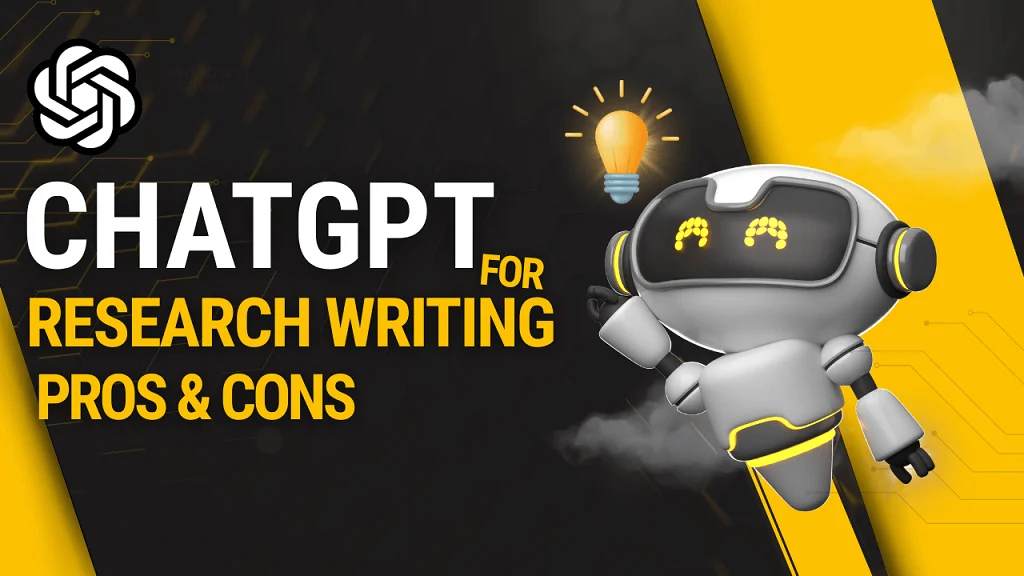
Artificial intelligence (AI) has significantly changed the way students and researchers approach academic writing. Among the many AI tools available today, ChatGPT has become one of the most widely used for brainstorming ideas, summarizing information, and improving writing. As a result, many students now ask an important question: Can ChatGPT write a literature review? The simple answer is yes, but only to a certain extent. ChatGPT can support the literature review process, but it cannot replace the critical thinking and analytical skills required to produce high-quality academic research
How ChatGPT Can Help with a Literature Review
A literature review requires researchers to examine existing studies, identify research gaps, compare different viewpoints, and build a logical understanding of the topic. ChatGPT can make several parts of this process faster and more efficient.
It can help researchers by:
- Explaining complex concepts in simple language.
- Summarizing lengthy research articles.
- Suggesting possible themes or subheadings.
- Improving grammar, sentence structure, and readability.
- Generating ideas for organizing the literature review.
These features can save valuable time, especially during the initial stages of research.
What Are the Risks?
Although ChatGPT is a powerful writing assistant, it also has limitations. It does not read journal databases in real time and may generate incorrect or outdated information. In some cases, it can even create references or citations that do not exist.
Relying entirely on AI can also weaken the quality of a literature review. A good review requires critical analysis, comparison of studies, and interpretation of research findings. These are skills that still depend on the researcher’s own understanding and judgment.
For this reason, universities recommend that students always verify information using reliable academic sources such as peer-reviewed journals, books, and trusted databases.
Best Practices for Using ChatGPT
To gain the greatest benefit from ChatGPT while maintaining academic integrity, researchers should use it responsibly.
Some recommended practices include:
- Use ChatGPT to generate ideas rather than final content.
- Verify every fact, citation, and reference before including it.
- Read the original research papers instead of relying only on AI summaries.
- Rewrite the content in your own words to demonstrate critical understanding.
- Follow your institution’s policies regarding AI-assisted academic writing.
Final Thoughts
ChatGPT should be viewed as a research assistant rather than a replacement for academic thinking. It can simplify repetitive tasks and improve writing efficiency, but it cannot evaluate evidence, identify subtle research gaps, or develop original arguments. A strong literature review combines the speed of AI with the researcher’s ability to analyse, question, and interpret existing knowledge. When used responsibly, ChatGPT becomes a valuable tool that supports academic writing while preserving the quality and integrity of research.
How AI Tools Are Transforming Literature Review Writing
Writing a literature review has always been one of the most time-consuming stages of academic research. Researchers need to read numerous journal articles, compare different viewpoints, identify research gaps, and organise findings into a logical structure. This process often requires weeks or even months of careful analysis. However, the emergence of Artificial Intelligence (AI) tools is transforming how literature reviews are written by making many of these tasks faster and more efficient.
AI-powered platforms such as ChatGPT, Elicit, Consensus, SciSpace, and ResearchRabbit are helping researchers manage large volumes of academic information with greater ease. While these tools cannot replace critical thinking, they can significantly improve productivity throughout the literature review process.
Faster Literature Search and Organisation
One of the biggest advantages of AI tools is their ability to simplify the search for relevant research. Instead of manually browsing hundreds of articles, researchers can use AI-powered platforms to discover related studies, identify key topics, and organise references more efficiently.
AI can also group similar studies based on themes, making it easier to understand how different researchers have approached a particular topic. This saves valuable time and allows researchers to focus on analysing the literature rather than simply collecting it.
Better Understanding of Research Papers
Many academic papers contain technical language and complex methodologies that can be difficult to understand, especially for new researchers. AI tools can summarise lengthy articles, explain difficult concepts in simple language, and highlight the main findings of a study.
These summaries help researchers quickly determine whether a paper is relevant before reading it in detail. However, AI-generated summaries should always be verified against the original source to ensure accuracy.
Improving Writing Efficiency
AI writing assistants can also support the writing process by improving grammar, sentence structure, and overall readability. They can suggest headings, generate outlines, and help organise ideas into a logical sequence. For researchers who struggle with academic writing, these features can reduce the time spent on editing and formatting.
Despite these advantages, researchers should avoid copying AI-generated text directly into their literature reviews. Academic writing requires original analysis and proper interpretation of existing studies.
Challenges and Responsible Use
Although AI has made literature review writing more efficient, it also has limitations. AI tools may provide outdated information, misinterpret research findings, or generate inaccurate references. Therefore, researchers should never rely on AI as their only source of information.
The most effective approach is to use AI as a research assistant rather than a replacement for human expertise. Every summary, citation, and factual statement should be verified using peer-reviewed journals and reliable academic databases.
Conclusion
AI tools are changing the way literature reviews are written by reducing repetitive tasks and improving research efficiency. They help researchers search for relevant studies, organise information, summarise complex articles, and enhance writing quality. However, the responsibility for analysing evidence, identifying research gaps, and producing original insights still belongs to the researcher. By combining AI with critical thinking and ethical research practices, students and scholars can create literature reviews that are both efficient and academically rigorous.
AI vs Human Literature Reviews: Which Produces Better Academic Research?
Artificial Intelligence (AI) has become a valuable tool for academic writing, particularly in literature review preparation. It can quickly search for information, summarize research papers, and organize ideas. However, this has raised an important question among students and researchers: Can AI produce a literature review that is better than one written by a human?
The answer depends on how AI is used. While AI offers speed and efficiency, human researchers provide the critical thinking and analytical skills that academic research demands.
Where AI Performs Well
AI tools can process large volumes of information in a short period. They help researchers by:
- Summarizing lengthy journal articles.
- Identifying common themes across multiple studies.
- Suggesting logical structures for literature reviews.
- Improving grammar and sentence clarity.
- Assisting with brainstorming research ideas.
These capabilities make AI an excellent assistant, especially during the early stages of a literature review. Researchers can save time on repetitive tasks and focus more on understanding the topic.
Why Human Expertise Still Matters
Despite these advantages, AI has important limitations. A literature review is not simply a collection of summaries. It requires researchers to evaluate evidence, compare different viewpoints, identify research gaps, and develop a logical argument based on existing studies.
These tasks require human judgment and subject knowledge. Experienced researchers can recognise conflicting findings, assess the quality of evidence, and explain why certain studies are more relevant than others. AI cannot fully understand the context, originality, or practical significance of research in the same way a human can.
Another challenge is accuracy. AI tools may occasionally provide outdated information, misinterpret research findings, or generate incorrect references. For this reason, researchers should always verify AI-generated content using peer-reviewed journals and trusted academic databases.
Finding the Right Balance
Rather than viewing AI and human expertise as competitors, researchers should see them as complementary. AI is highly effective at improving efficiency, while humans remain essential for critical analysis, interpretation, and academic decision-making.
The strongest literature reviews combine the speed of AI with the insight of the researcher. AI can assist with searching, summarising, and organising information, but the responsibility for evaluating evidence and presenting original arguments always belongs to the author.
Conclusion
AI has transformed literature review writing by making research faster and more organised. However, it cannot replace the intellectual skills that define quality academic research. Human researchers bring creativity, critical thinking, ethical judgment, and subject expertise that AI cannot replicate. The future of academic writing is therefore not about choosing between AI and humans, but about using both effectively to produce well-informed, accurate, and meaningful literature reviews.
Best AI Tools for Literature Reviews in 2026
Artificial intelligence has become an essential part of academic research. Instead of spending hours searching through databases or manually organizing references, researchers can now use AI-powered tools to streamline the literature review process. While these tools cannot replace critical thinking, they can improve efficiency and help researchers focus on analysing existing studies.
Here are some of the best AI tools for literature reviews in 2026.
ChatGPT
ChatGPT is one of the most widely used AI assistants for academic writing. It helps researchers summarize articles, explain complex concepts, generate outlines, and improve the readability of literature reviews. It is also useful for brainstorming research questions and identifying possible themes. However, researchers should always verify the information with original academic sources.
Elicit
Elicit is designed specifically for research. It searches academic papers, extracts key findings, and summarizes research evidence. The platform helps researchers compare studies and identify relevant literature more quickly than traditional keyword searches.
SciSpace
SciSpace simplifies the process of reading research papers. It explains difficult academic terms, summarizes sections of journal articles, and answers questions based on uploaded research papers. This makes it particularly useful for students who are new to academic research.
ResearchRabbit
ResearchRabbit helps researchers discover related studies through interactive citation networks. Instead of relying only on keyword searches, it visually connects authors, publications, and research topics, making it easier to explore new literature.
Consensus
Consensus uses AI to search peer-reviewed research and provides evidence-based answers to research questions. It helps researchers quickly identify studies that support or challenge a particular topic, making literature reviews more comprehensive.
Choosing the Right AI Tool
Each AI tool serves a different purpose. ChatGPT is ideal for writing assistance, Elicit and Consensus help locate research evidence, SciSpace simplifies complex papers, and ResearchRabbit improves literature discovery. Using these tools together can significantly improve research productivity.
However, AI should always be viewed as a research assistant rather than a replacement for human expertise. Researchers must verify information, critically evaluate evidence, and develop original insights to produce a high-quality literature review. By combining AI with sound academic practices, scholars can conduct faster, more accurate, and more effective literature reviews.
How to Use AI Without Violating Academic Integrity in Your Literature Review
Artificial intelligence (AI) has become a valuable tool for academic research, helping students and researchers save time during the literature review process. From summarizing journal articles to organizing references and improving writing, AI can simplify many research tasks. However, using AI without proper care can lead to academic integrity issues such as plagiarism, inaccurate citations, or misrepresentation of ideas. Therefore, it is essential to use AI responsibly.
Use AI as an Assistant, Not the Author
AI should support your research, not replace your thinking. It can help generate ideas, explain difficult concepts, or improve sentence structure, but the interpretation and analysis of research should always come from you. A literature review should reflect your understanding of existing studies rather than AI-generated content.
Verify Every Source
One of the biggest risks of AI tools is that they may provide incorrect information or generate references that do not exist. Always verify citations, statistics, and research findings using trusted academic databases such as Google Scholar, Scopus, Web of Science, or peer-reviewed journals before including them in your literature review.
Write in Your Own Words
Avoid copying AI-generated text directly into your assignment or research paper. Instead, use AI to understand a concept and then explain it in your own words. This demonstrates critical thinking and helps maintain originality in your academic work.
Follow Your Institution’s AI Policy
Universities have different guidelines regarding the use of AI in academic writing. Some institutions allow AI for brainstorming and language improvement, while others require students to disclose its use. Understanding these policies will help you avoid unintentional academic misconduct.
Final Thoughts
AI is transforming the way literature reviews are written, but it should be used responsibly. The best approach is to combine the efficiency of AI with your own critical thinking, analysis, and ethical judgment. By verifying sources, writing original content, and following institutional guidelines, researchers can take advantage of AI while maintaining academic integrity. Responsible use of AI not only protects the credibility of your work but also helps develop the research skills that every scholar needs for long-term academic success.









Comments are closed