Last updated on September 30th, 2026 at 01:16 pm
Ten years ago, a successful PhD scholar was often defined by deep expertise in a single discipline. Today, that definition is already changing. By 2030, earning a doctorate will still require rigorous research. However, the expectations placed on researchers will extend far beyond publishing papers or defending a thesis.
This raises an important question: “What will make a great researcher by 2030”
Many people think the answer is mastering the latest technologies. While technologies will certainly play a bigger role, it is only one piece of the puzzle. The researchers who stand out in the future will not simply be the ones with advanced software or the highest number of publications. They will be the people who know how to think critically, adapt to change, communicate clearly, and continue learning throughout their careers.
The world is changing faster than ever. New discoveries are happening across every discipline, industries are becoming more connected, and global challenges demand solutions that no single field can solve alone. Therefore, the future will need more than technical knowledge. They will need a mindset that is flexible, curious, and open to lifelong learning.
The Future of Research May Have Ancient Roots
When we think about the skills researchers will need by 2030, artificial intelligence, data science, and digital tools usually dominate the conversation. These technologies will undoubtedly shape the future of research. Yet, one of the most valuable lessons about becoming a better researcher comes from a much older tradition, “Aanvikshiki,”, an ancient Indian discipline of inquiry. More than two thousand years ago, the ancient Indian scholar Chanakya (Kautilya) introduced the concept of “Aanvikshiki” in the Arthashastra.
It is a powerful reminder that every scientific breakthrough begins long before data is collected or experiments are performed. It begins with disciplined thinking. That simple idea feels surprisingly relevant today. We are surrounded by more information than ever before, yet information alone does not create knowledge. Researchers still need the ability to think clearly, question deeply, and make sound judgments.
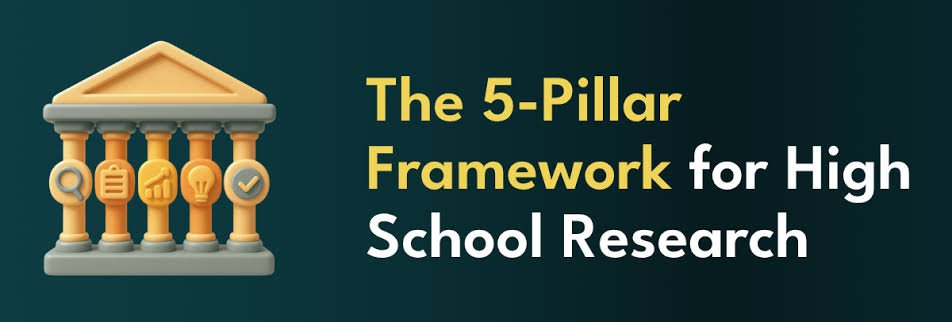
The five pillars of Aanvikshiki that every researcher can benefit from:
• Logical thinking to build strong and coherent arguments.
• Scientific thinking relies on evidence instead of assumptions.
• Reasoning to connect observations with meaningful conclusions.
• Strategic thinking to solve problems systematically.
• Critical thinking to question evidence and avoid bias.
The Human Skills That Technology Cannot Replace
The future of research will undoubtedly be shaped by artificial intelligence, automation, and digital technologies. However, these tools can only support research, but they cannot replace the qualities that make a researcher truly exceptional. AI can summarize hundreds of journal articles, generate code, and analyse massive datasets in minutes. Yet it cannot decide whether a research question addresses a meaningful problem. Nor can it exercise ethical judgment or understand the broader impact of scientific discoveries. Those responsibilities will always belong to the researcher. This is where the principles of Aanvikshiki become surprisingly relevant. Logical thinking helps researchers build strong arguments, scientific thinking encourages decisions based on evidence, and critical thinking ensures that conclusions are questioned rather than accepted blindly.
This quote perfectly captures the mindset every future researcher should develop. Technology can process information, but only human reasoning can determine whether that information is reliable, ethical, and meaningful. By 2030, researchers who combine technological competence with disciplined thinking will have a clear advantage over those who rely on technology alone.
Building the Researcher of 2030
Research is becoming increasingly collaborative. Many of today’s global challenges, such as climate change, sustainable energy, healthcare innovation, and artificial intelligence, cannot be solved by a single discipline. Future researchers will need to work across diverse fields and communicate effectively with people who have different expertise.
This means that technical knowledge alone will no longer define research excellence. Future PhD scholars must also become effective communicators, lifelong learners, and adaptable professionals. One observation stands out when looking at successful researchers. They rarely stop learning after completing a degree. Instead, they continuously update their knowledge, explore emerging technologies, and remain open to new perspectives. They understand that learning is not an event but an ongoing process.
Nobel Prize-winning scientist Albert Szent-Györgyi expressed this beautifully:
“Research is to see what everybody else has seen, and to think what nobody else has thought.”
Innovation often begins with a different way of thinking rather than access to better technology. Researchers who remain curious, collaborate openly, and embrace lifelong learning will be best prepared for the rapidly changing research landscape of 2030.
Essential Skills Every PhD Scholar Should Develop Before 2030
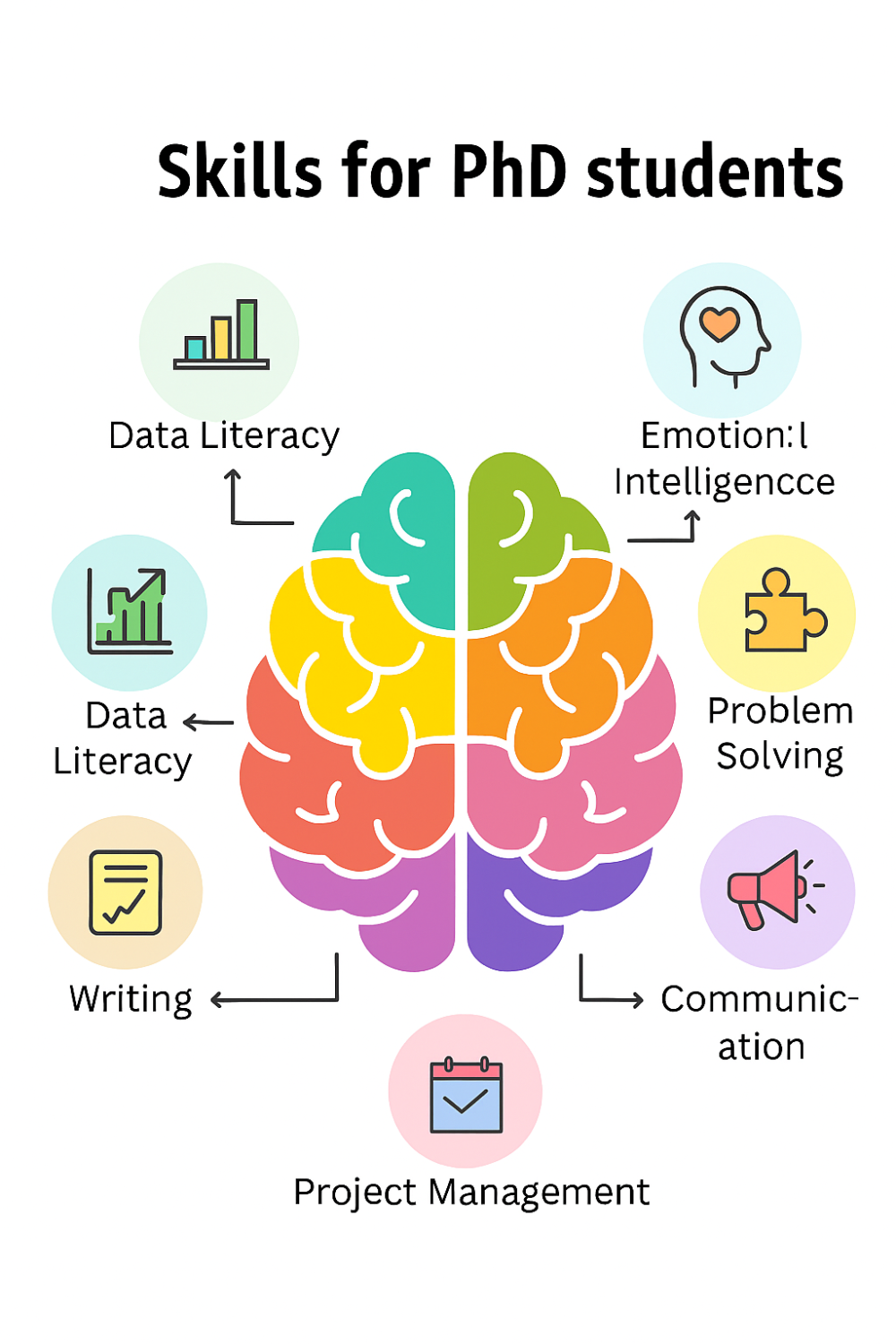
While technical expertise will always be important, the researchers who thrive in the coming years will possess a broader set of skills. These abilities will help them adapt to changing technologies, collaborate effectively, and produce research with greater impact.
Some of the most valuable skills include:
- Lifelong learning: Research is evolving rapidly. Future scholars must continuously update their knowledge by learning new methods, tools, and emerging technologies.
- Digital and AI literacy: Understanding how to use AI tools responsibly, manage research data, and evaluate AI-generated outputs will become an essential part of academic work.
- Interdisciplinary collaboration: Many research problems now require expertise from multiple fields. Working effectively with researchers from different disciplines will become a major strength.
- Critical thinking: Researchers should question assumptions, evaluate evidence objectively, and avoid accepting conclusions without proper validation.
- Communication skills: The ability to explain complex research to supervisors, funding agencies, industry professionals, and the public is becoming just as important as conducting the research itself.
- Adaptability: Technologies and research methodologies will continue to evolve. Successful researchers will embrace change rather than resist it.
- Ethical decision-making: Maintaining academic integrity, protecting research data, and ensuring responsible use of AI will remain fundamental responsibilities for every researcher.
These skills reflect the same principles found in Aanvikshiki, which emphasizes logical reasoning, scientific inquiry, strategic thinking, and disciplined analysis. Although developed centuries ago, these principles remain remarkably relevant for modern doctoral research.
Research Beyond Publications: Creating Meaningful Impact
For many years, research success was often measured by the number of papers a scholar published. While publications remain an important part of academic life, they are no longer the only measure of success. By 2030, researchers will be expected to create work that delivers meaningful impact beyond journals and conferences.
Future PhD scholars should think about how their findings can solve practical problems, influence public policy, support industry innovation, or improve people’s lives. Research that addresses real-world challenges is more likely to attract collaborations, funding opportunities, and long-term recognition.
Creating impact also means making research accessible. Scholars who can explain their work to different audiences, including policymakers, businesses, and the public, will increase the reach of their ideas. Ultimately, successful research is not just about generating new knowledge but about ensuring that knowledge contributes to society in meaningful and lasting ways.
Building a Global Research Mindset
Research is becoming increasingly global, with scholars collaborating across countries, institutions, and disciplines to address shared challenges. As a result, future researchers must develop a global mindset alongside their technical expertise.
Working with international teams requires more than academic knowledge. It involves understanding different perspectives, respecting cultural diversity, and communicating effectively across geographical and disciplinary boundaries. Researchers who embrace collaboration often gain access to new ideas, advanced facilities, and broader professional networks that strengthen both their work and career development.
A global mindset also encourages researchers to think about how their findings can benefit communities beyond their own region or country. Whether addressing climate change, healthcare, sustainable technologies, or digital innovation, many research challenges require international cooperation. By remaining open to new perspectives and building strong collaborative relationships, PhD scholars will be better prepared to contribute to research that has both local relevance and global impact.
Conclusion: The Future Belongs to Curious Minds
The future researcher will undoubtedly work with more powerful technologies than ever before. Artificial intelligence, advanced analytics, and digital research tools will continue to transform how knowledge is created and shared. Yet these innovations do not reduce the importance of human thinking and they make it even more valuable.
Perhaps this is why the ancient concept of Aanvikshiki remains so relevant today. Long before modern laboratories and computers existed, it emphasized logical thinking, scientific reasoning, strategic planning, and critical inquiry. These qualities continue to define excellent researchers, regardless of how technology evolves. The future of research is therefore not simply about learning the latest tools. It is about developing the mindset to use those tools wisely, ethically, and creatively.
“The important thing is not to stop questioning. Curiosity has its own reason for existing”
–Albert Einstein
By 2030, the most successful PhD scholars may not be those who have mastered every emerging technology. They will be the ones who continue asking thoughtful questions, remain open to learning, and use their knowledge to create meaningful change. Research will always evolve, but curiosity, integrity, and disciplined thinking will remain timeless foundations of discovery.









Comments are closed