

You have a dissertation topic. You have your research objectives. You may even have your questionnaire ready.
Then comes the question that makes many postgraduate students panic:
Perhaps only a few people responded to your questionnaire.
Perhaps some responses are incomplete.
Perhaps the dataset you received from a supervisor or organisation is messy and difficult to analyse.
Or perhaps you have almost no primary data at all.
At this stage, many students assume that their dissertation is finished before the research has really begun.
It isn’t.
Having limited data does not automatically mean that you cannot complete a Master’s dissertation. But it does mean that your research strategy needs to be examined carefully.
As academic researchers, one of the first things we ask is not:
We ask:
That difference matters.
Understanding Dissertation Data Challenges
The First Problem Is Often Not “No Data”—It Is Poor Data
Students frequently tell us:
That is a different problem.
A dataset may contain responses but still require substantial preparation before meaningful analysis is possible.
We recently worked with a survey dataset that illustrates this clearly. The original file contained 68 response records. It included raw questionnaire responses, demographic information, investment preferences and Likert-scale responses, but also contained an unnecessary blank column and fields that were not yet arranged in the most analysis-friendly format.
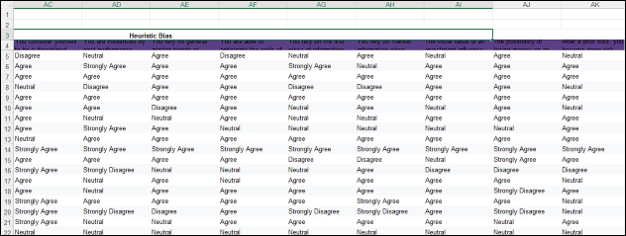
Rather than immediately running statistical tests, the first step was to understand the structure of the data.
That is where good research support begins.
1. We Start with the Data You Actually Have
Before deciding that the sample is “too small,” we inspect it.
We look at:
- How many genuine observations are available?
- Which variables have been answered?
- Are there missing values?
- Are categorical responses consistent?
- Are there duplicate records?
- Can the variables be coded appropriately for analysis?
- Does the dataset actually correspond to the research objectives?
In the initial dataset used in our example, the 68 response records contained one blank field across the respondent rows and some categories that required closer examination.
The education variable, for example, included both “PhD” and “PhD” with an extra trailing space, while other fields used slightly different descriptions for similar categories.
These may look like tiny formatting issues.
They aren’t always tiny in statistical analysis.
A computer can treat two visually similar categories as two different categories.
That is why data cleaning comes before data interpretation.
2. We Clean and Structure the Dataset
Good data analysis does not begin with a statistical test.
It begins with a dataset that can actually support one.
In the prepared version of our example, the survey structure was reorganised into 40 analysis-ready variables, including standardised demographic fields, investment indicators and numerical coding for Likert-scale responses.
For instance, investment choices that originally appeared together in a multi-response field were represented separately as variables such as:
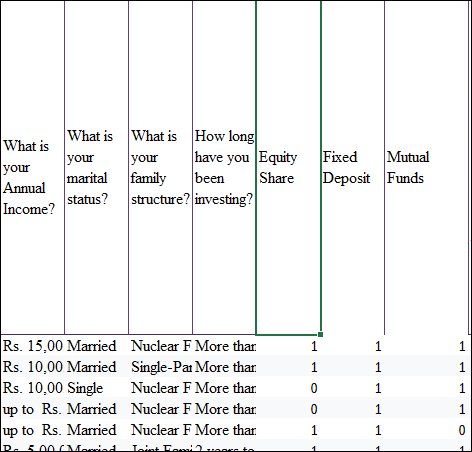
This kind of restructuring makes the dataset much easier to work with in statistical software.
Cleaning data is not the same as creating data.
Changing the format of 68 genuine observations can improve the quality and usability of the dataset.
It does not ethically turn 68 respondents into 1,000 respondents.
That distinction should never be blurred.
3. We Determine What the Existing Data Can Actually Tell You
A small sample is not automatically useless.
It may support exploratory analysis, preliminary observations, pilot work or limited descriptive conclusions, depending on the research design.
But the strength of the conclusion must match the strength of the evidence.
Research Evidence Matters
The available evidence should determine the strength of your findings. Research conclusions should never exceed what the data can genuinely support.
Suppose you have 50 questionnaire responses.
We may be able to examine:
- What patterns appear in the responses?
- Which variables show noticeable associations?
- Are the responses highly concentrated in particular categories?
- Does the observed pattern resemble previous studies?
- What additional evidence would be necessary before making a stronger claim?
What we do not do is treat a small convenience sample as though it automatically represents an entire population.
The sample size, sampling method and research design all affect what your findings can reasonably support.
4. What If Your Dataset Is Really Small?
This is where research strategy becomes more important than panic.
Depending on the university’s requirements and your research design, legitimate options may include collecting additional responses, using an appropriate secondary dataset, redesigning the study around secondary data, adopting a qualitative approach, or reframing the work as exploratory research where that genuinely fits the research question.
But the choice should be made before forcing the data into a preferred statistical model.
Possible Research Routes
- Additional primary data collection
- Appropriate secondary dataset usage
- Redesigning the research methodology
- Qualitative research approach
- Exploratory research design
For example, a student may start with a plan to conduct regression analysis requiring a particular sample size, only to discover that the actual response count is far smaller.
The solution is not to make the dataset appear larger.
The solution is to reconsider the research design.
Sometimes that means more data collection. Sometimes it means a different analytical approach. Sometimes it means narrowing the research question. And sometimes it means using an appropriate existing dataset.
5. What About Previous Research?
This is where a strong literature review becomes especially valuable.
When primary data are limited, previous research helps you understand the broader evidence surrounding your research problem.
We examine relevant:
We look for:
- What variables have other researchers used?
- How were those variables measured?
- What sample sizes were used?
- Which analytical methods were appropriate?
- What findings were consistent?
- Where were findings contradictory?
- What limitations did previous researchers report?
This does not mean borrowing someone else’s results.
It means using the existing evidence to make better decisions about your own research.
Previous studies can help you develop hypotheses, justify variables and interpret your findings.
They cannot become your fabricated primary data.
6. A Bigger Dataset Is Not Automatically a Better Dataset
This is one of the most important lessons our example demonstrates.
The prepared workbook contains 1,037 rows, which may initially look like a dramatic improvement from the original 68.
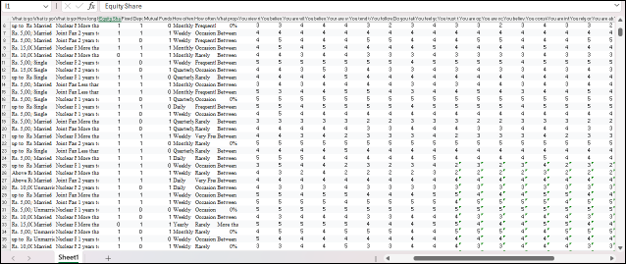
But our structural check found that the prepared file contains only 68 unique complete response patterns, with 969 additional rows duplicating existing patterns.
That means the file should not be interpreted as evidence that 1,037 independent participants were obtained.
And this is precisely why responsible academic data support requires more than making a spreadsheet look impressive.
A statistical dataset must reflect real observations and a traceable research process.
Responsible Academic Research
Improving genuine data organisation is acceptable.
Presenting duplicated or invented observations as real participants damages research credibility.
Responsible academic research requires transparency, traceability and accountability throughout the research process.
Our Research Philosophy
We improve the data you legitimately have. We do not disguise invented observations as real participants.
7. What If You Have Almost No Data?
Then we step back and ask a bigger question:
There may be several legitimate routes.
- You may need to collect additional primary data.
- You may be able to use a suitable secondary dataset.
- Your dissertation may be redesigned around secondary-data analysis.
- A qualitative methodology may be more appropriate.
- A structured literature-based study may be possible where your institution permits it.
- An exploratory or pilot design may sometimes be appropriate.
An exploratory or pilot design may sometimes be appropriate—but only when the research purpose genuinely is to test feasibility, refine instruments or assess the research process.
Calling a small dataset a “pilot study” merely because the sample is small does not make it a pilot study.
The purpose of the research determines that.
8. What Should You Never Do?
- Never invent respondents.
- Never create questionnaire responses simply because your supervisor expects a larger sample.
- Never duplicate observations and present them as independent participants.
- Never manufacture statistical values because they produce a more attractive hypothesis test.
- Never take findings from previous research and present them as your own empirical findings.
- Never assume that a spreadsheet containing more rows automatically represents better research.
Fabricated data are not a harmless shortcut. They undermine the research record itself.
So, What Do We Do at Excellence Innovations?
We start with research diagnosis, not data inflation.
Examine Existing Data
Clean & Organise Dataset
Identify Data Problems
Select Suitable Methodology
Build Defensible Analysis
First, we examine the information you already have.
Then we clean and organise the dataset.
We identify missing values, inconsistent categories, duplicate records and structural problems.
We assess whether the available sample matches the research design.
We review relevant literature and previous methodologies.
We identify whether additional data collection or an alternative research strategy is needed.
Then we help structure the analysis around what the evidence can actually support.
Throughout the process, we keep an essential distinction clear:
Our role is to help make it cleaner, clearer, better organised and methodologically defensible.
Explore Our Research Support Services
Need expert guidance for your academic research journey?Explore our specialised services:
No Data Does Not Automatically Mean No Dissertation
A lack of data can feel like the end of a dissertation.
Often, it is actually the point where the research strategy needs to change.
Maybe your dataset is smaller than expected.
Maybe it needs cleaning.
Maybe your sampling approach needs reconsideration.
Maybe you need additional primary data.
Maybe an appropriate secondary dataset can answer the question more effectively.
The important thing is not to force the research into a spreadsheet simply because you need a result.
The method must fit the evidence.
The conclusions must stay within what the evidence can genuinely support.
That is the approach we follow at Excellence Innovations.
Because when a student tells us:
Our first response is not panic.
Need Help With Your Dissertation Data?
Excellence Innovations helps researchers analyse, clean and structure their existing data while maintaining academic integrity.
Discuss Your Research








Comments are closed